Same Team, Up to 5x the Cases: Automating Truck Damage Claims
How a leading truck damage specialist in Germany went from 45-minute WhatsApp video calls in office hours to guided reports around the clock, in 26 languages.
Key takeaways
- Before the project, every damage report meant a phone call and a live WhatsApp video call with the driver, about 45 minutes per report, only during office hours.
- Drivers are free in the evening and at weekends, the office worked 9 to 5, and the drivers speak many languages, Vietnamese included.
- The people collecting photos were overloaded, and that capped how many new clients the company could take on.
- We built a guided report on the driver's phone: one photo at a time, checked by AI while the driver is still at the truck, in the driver's own language.
- Result: about 5 minutes of staff time per report instead of about 45, a team that can handle up to 5x the volume, reports around the clock, complete case files every morning.
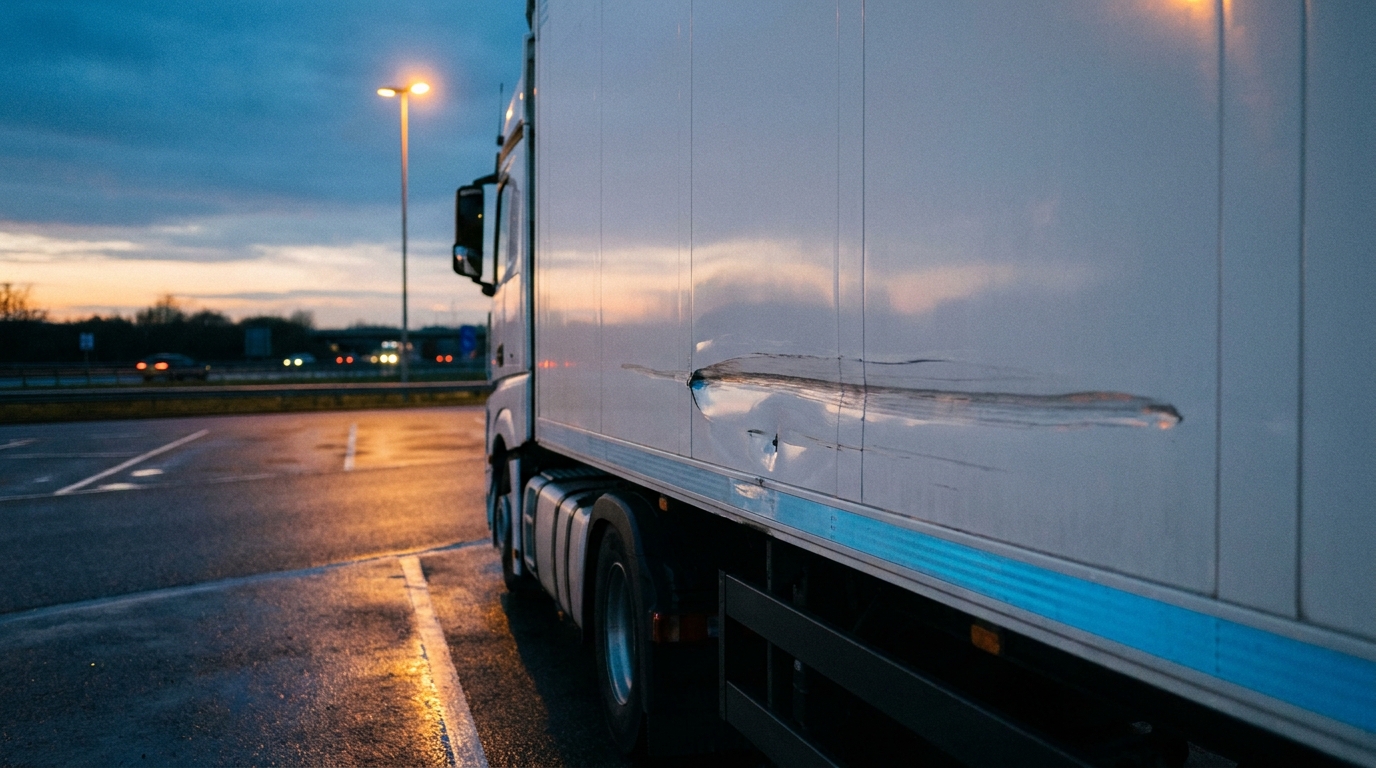
A truck gets scraped on a Friday evening somewhere in Europe. The driver has time to take the photos right then, during the break. The office that needs them opens on Monday at nine.
That was everyday life for a leading truck damage specialist in Germany, before we built TraxAgent for them. Today a report takes the team about 5 minutes instead of about 45, the same team can handle up to five times the volume, drivers report 24/7 in 26 languages, and nobody new was hired.
How a damage report used to work
The client processes damage reports from truck drivers on the road all over Europe. Before an insurance claim can move, the report has to be complete: the right photos from the right angles, plus the vehicle identification number, the odometer reading and the licence plate.
There was no automation at all. A driver called in, and a staff member started a live video call on WhatsApp to see the damage. The photos and videos came in over WhatsApp, one by one, while the staff member explained which angle was still missing. Then the data went into the system by hand.
One report took about 45 minutes of a staff member's time.
Three problems on top of each other
The 45 minutes alone would have been manageable. Three other things made it a ceiling for the whole company.
Office hours didn't match driving hours
The office was staffed from nine to five. Drivers drive during the day. Their free time to stand next to the truck and take photos is in the evening, on breaks and at weekends. So reports either waited, or drivers had to stop during working hours to fit the office's schedule.
Many languages, one phone call
Drivers on European roads speak many languages. This client even had drivers who speak Vietnamese. Explaining over a video call exactly which photo you need, from which side, is hard enough in a shared language. Without one, it takes longer and goes wrong more often.
The team was full
The people collecting photos and videos were completely loaded with work. That had a consequence beyond stress: the company couldn't take on more clients, because every new client meant more 45-minute calls for the same people. Hiring more staff who can do this in several languages is slow and expensive.
The owner saw this clearly and was convinced that AI would be the step that lets the company grow past that point. That clarity made the project easier than most: we didn't have to argue for change, only find the right place to make it.
What we mapped first
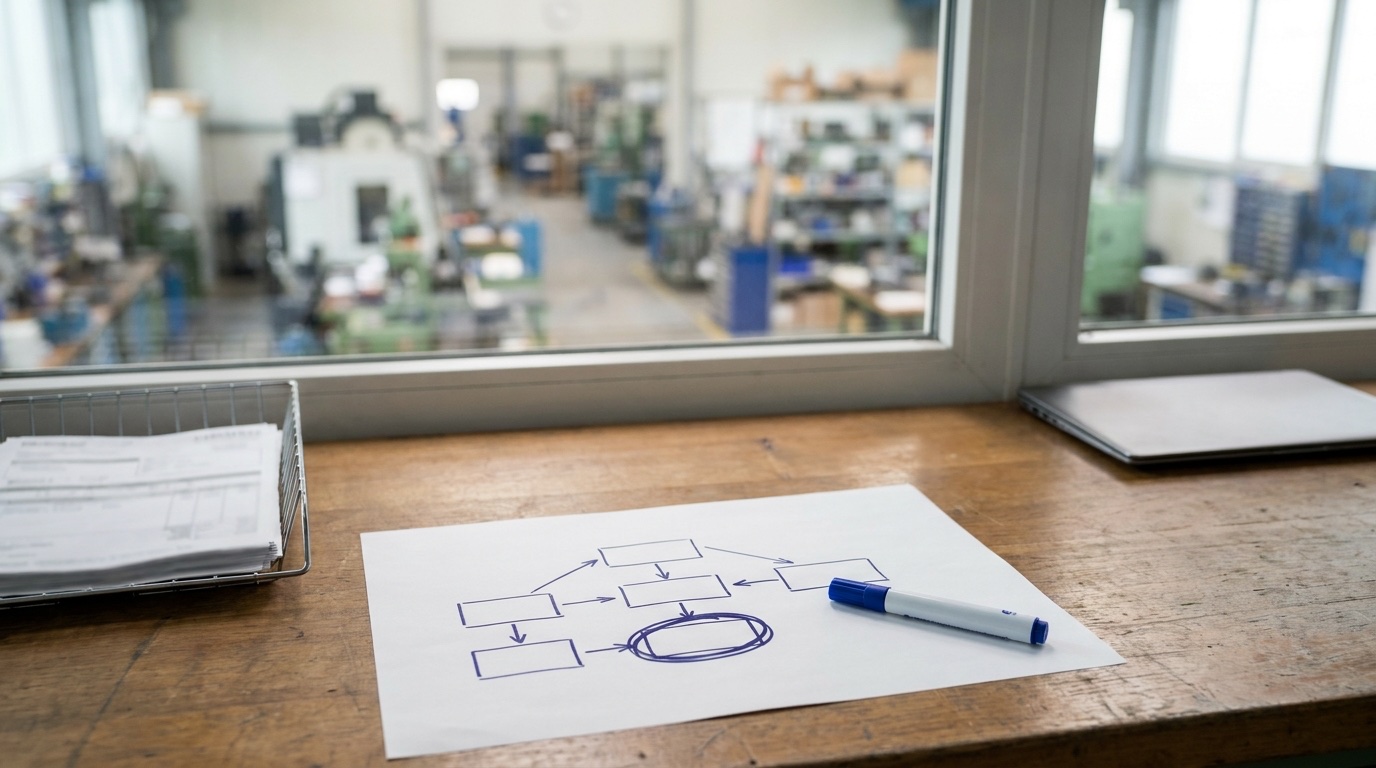
Before choosing any technology, we followed a report from the driver's side: someone tired, next to a damaged trailer, with a phone and a vague idea of which photos the office wants.
Written down, a few things stood out:
- Most of the 45 minutes went into getting the photos right: guiding the camera, asking for another angle, waiting for an upload.
- The required photos depend on the damage. A tractor unit needs a different set than a trailer, and coupling damage needs its own, so one generic list asks drivers for too much or too little.
- The VIN, odometer and plate are visible in photos the driver is already taking, so nobody needs to type them.
- A driver who doesn't understand the instruction sends the wrong photo. Language had to be part of the design from the start.
- Some reports will always come by email from fleet managers and partner companies, so the system has to accept those too.
This is how we start every project. Building is faster once you know where the time actually goes. We wrote about the general version of this in AI works in demos, here's why it fails in your business.
What we built
TraxAgent works like this. The driver gets an SMS with a link. It opens a mobile web app, so there's nothing to install. The language is suggested from the phone number's country code, and the driver can switch at any time. Twenty-six languages are available, while staff keep working in German or English.
The app guides the driver photo by photo. The list depends on the damage: 7 photos for a tractor unit, 8 for a trailer, 15 when both are involved and 11 for coupling damage. The driver only sees the steps their case needs.
Each AI step does one job:
- Checking each photo. First: is this the tractor or the trailer, and from which angle? Then: is the light, sharpness and framing good enough? If not, the driver gets a concrete instruction, like stepping back for a wider shot, while still standing next to the truck.
- Reading data from photos. Text recognition pulls the VIN, odometer and licence plate from the pictures.
- Turning emails into cases. When a report arrives by email, AI extracts the company and driver, the vehicle, the place and date, and the damage description, and creates a draft case for staff to review. After approval, the driver gets the SMS link to add photos.
Every check carries a confidence score. When the system isn't sure, a person decides. That rule matters more than the model behind it: a claim approved on a wrong guess costs far more than the minute someone spends looking at an unclear photo.
Staff work in an admin portal where each case arrives complete and structured. The system runs on EU servers in Germany, which matters when the data includes drivers' personal details and accident locations. We explained why in why AI trust and sovereignty are now product decisions.
What changed for the team
The headline numbers: a report now takes about 5 minutes of staff time instead of about 45, and the same team can handle up to five times the volume, with no additional hires. "Up to" is deliberate: it is capacity, and how much of it gets used depends on the week, the mix of damage types and how many reports come in by email.
Drivers now report in the evening and at weekends, when they have time and before the truck moves on. Staff start the morning with complete case files instead of a queue of video calls. The back-and-forth about missing photos mostly disappeared, because the photo check catches problems while the driver is still on site.
Language stopped being a reason for a case to stall. A driver who speaks Vietnamese gets the same clear instructions as one who speaks German.
And the team has room again. The capacity that went into video calls now goes into checking cases and looking after clients, which is what lets the company take on new ones.
Why a guided app beat a better phone process
One option would have been more staff, longer hours or a multilingual call centre. All of them keep the 45-minute call as the unit of work and only add more people doing it.
The guided app changes the unit of work. The driver does the photo part alone, at the right moment, with instructions they understand, and the AI checks the result immediately. Staff only step in where judgement is needed. That's the pattern I look for in every project: find the step where skilled people spend time on something a well-designed tool can guide, and move that step.
If you're wondering what a project like this costs to build and run, we broke it down in how AI implementation projects are priced.
The lesson underneath
What moved the numbers was taking the photo step out of the phone call: drivers do it when they actually have time, in a language they understand. Finding that step took a careful look at how a report really moves. Once the map was right, the build was the straightforward part, and the owner got what they were after: room to grow.
Frequently asked questions
For the narrow job of checking whether a photo shows the right part of the vehicle and is sharp and well lit, yes. The key is a confidence score on every check, with unclear cases going to a person instead of being approved automatically.
No. They get an SMS link that opens a mobile web app in the browser, in their own language.
AI reads the email, extracts the driver, vehicle, place, date and damage description, and creates a draft case. Staff review it, and after approval the driver gets a link to add the photos.
The app gives instructions in 26 languages, chosen from the phone number and changeable by the driver. Staff see the case in German or English.
Want to see what AI can do for you?
Tell us about your business. We'll get back to you within 24 hours.
Schedule a Strategy Call